Reality of Renewables – Rural Communities Ignored on Renewable Energy Zones
By Steven Tripp
“Enough. For goodness’ sake, we’ve had enough.”
This was the answer from Mike, a farmer north-west of Wellington in New South Wales, when I asked him what message he would send to people in the city who support renewable energy.
“We're getting absolutely smashed by noise and construction, and the damage to the environment alone is just massive”, he went on to say, as I interviewed him on his property which overlooks the Bodangora Wind project.
Mike’s family have lived on his farm for generations. His home, built in 1902, is a beautiful relic of the time and has been kept in immaculate condition. Unfortunately, since the wind project began operating in 2019, the walls within his home have begun to crack, with some walls showing multiple cracks from the floor to the ceiling.
Worse still, Mike has not slept since the project began operating due to the noise of the turbines.
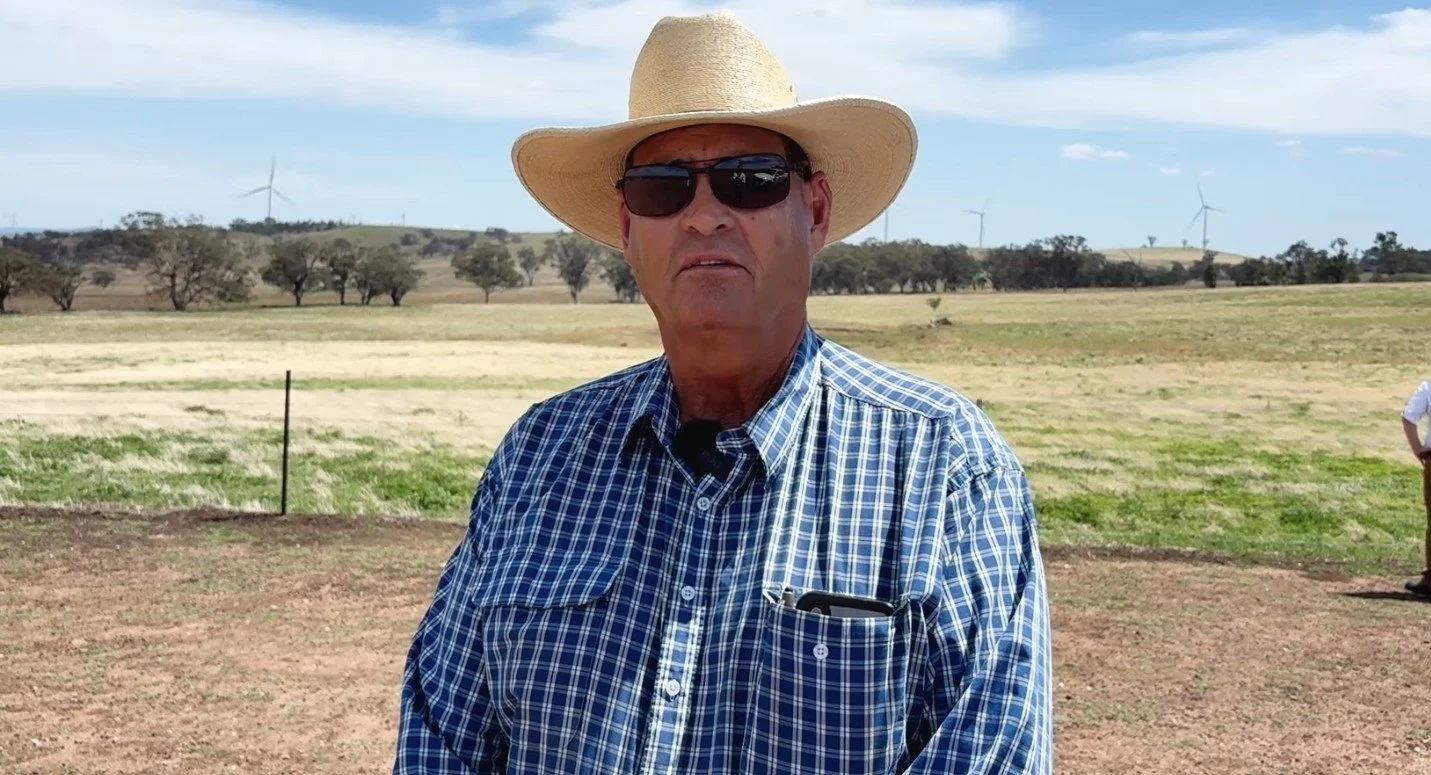
Farmer Mike standing on his property with the Bodangora wind project behind him
“We're just getting smashed”, he continued. “We have turbines behind me. I got turbines to the south of me. To the west of me I've got a solar farm and to the east of me I've got another project that's slated to come in almost right on my boundary. Enough. Give us a break.”
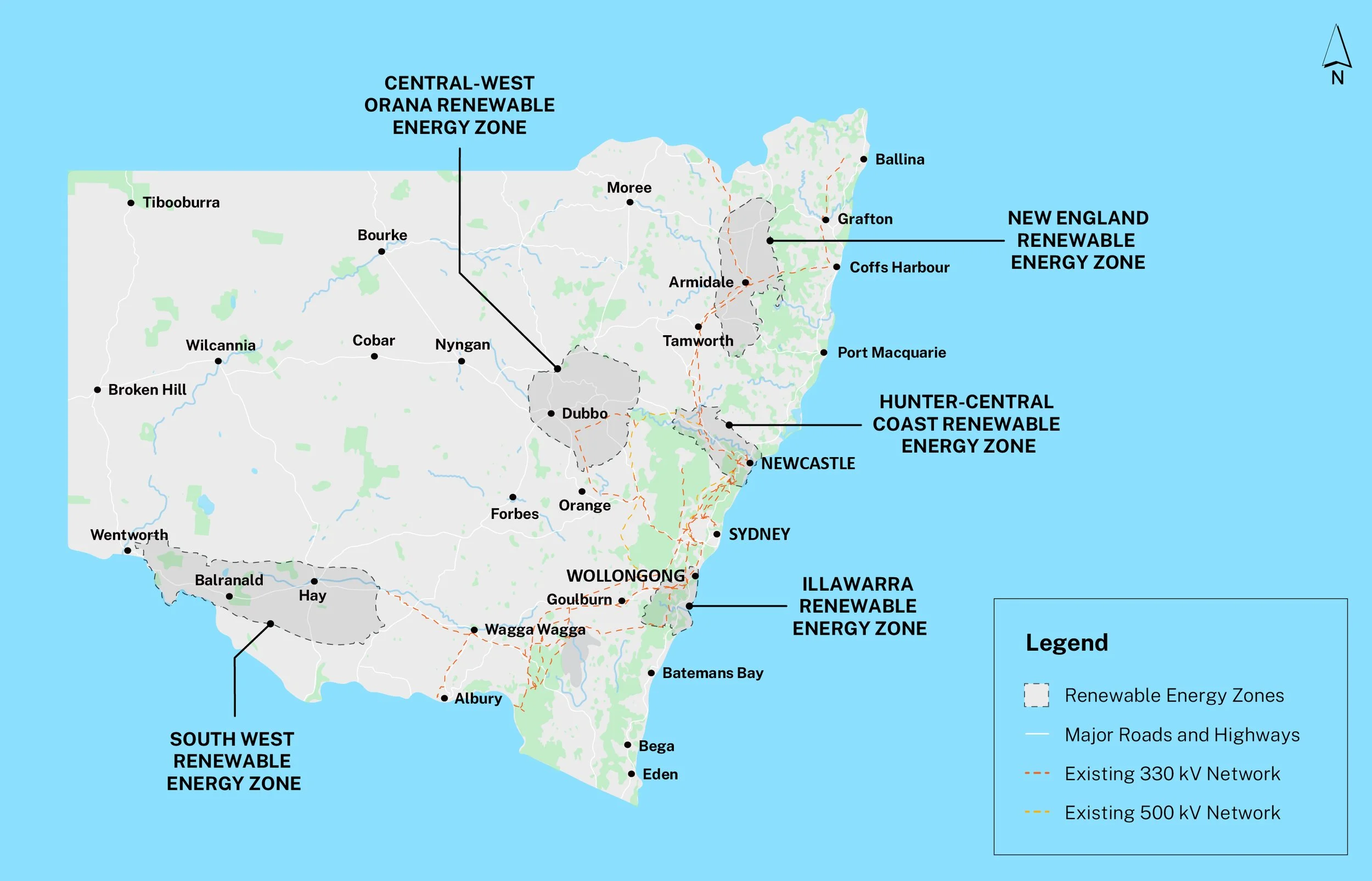
Mike’s property falls within the Central West Orana Renewable Energy Zone (CWOREZ). There are five renewable energy zones (REZ) planned for or are underway in New South Wales, which the NSW Government describe as ‘the equivalent of modern-day power stations’.
Astonishingly, Energy Co’s website admits that the CWOREZ ‘is approximately 20,000 square kilometres centred by Dubbo and Dunedoo’. To put that into perspective, that is similar to the size of Wales or Slovenia.
Both State and Federal Governments across Australia are embracing renewable energy, with Climate Change and Energy Minister, Chris Bowen, leading the charge.
At a press conference for the ‘Cheaper Home Batteries Program’ in Wetherill Park on March 1, 2026, Mr. Bowen said, “Australians are all in for these sorts of programs. And for those who deny and delay, and want to stop these programs, they might want to reflect they are not on the side of ordinary Australians who are living this transition every single day”.
I certainly did not meet any ordinary Australians who supported renewable projects when I toured the CWOREZ at the end of February. In fact, I found the opposite.
In Geurie, I met with Mary, who is facing 270-degrees of solar panels around her property from the Boree Solar project.
“The entire Central West, this renewable energy zone, is just about to look like a total wasteland”, she began.
“This is what people don't comprehend. This small project here (laughs) is over 3,000 acres with more than 660,000 panels, plus battery energy storage systems.”
“We know there's heavy metals. We know there's toxicity. We know there's chemical runoff. We know there's fire hazard. Wellington farm has already twice caught on fire this year. It's left chemical residue. There's been no due diligence done by government or by any of the proponents of these projects. The government has not done any work to check cumulative effects on communities.”
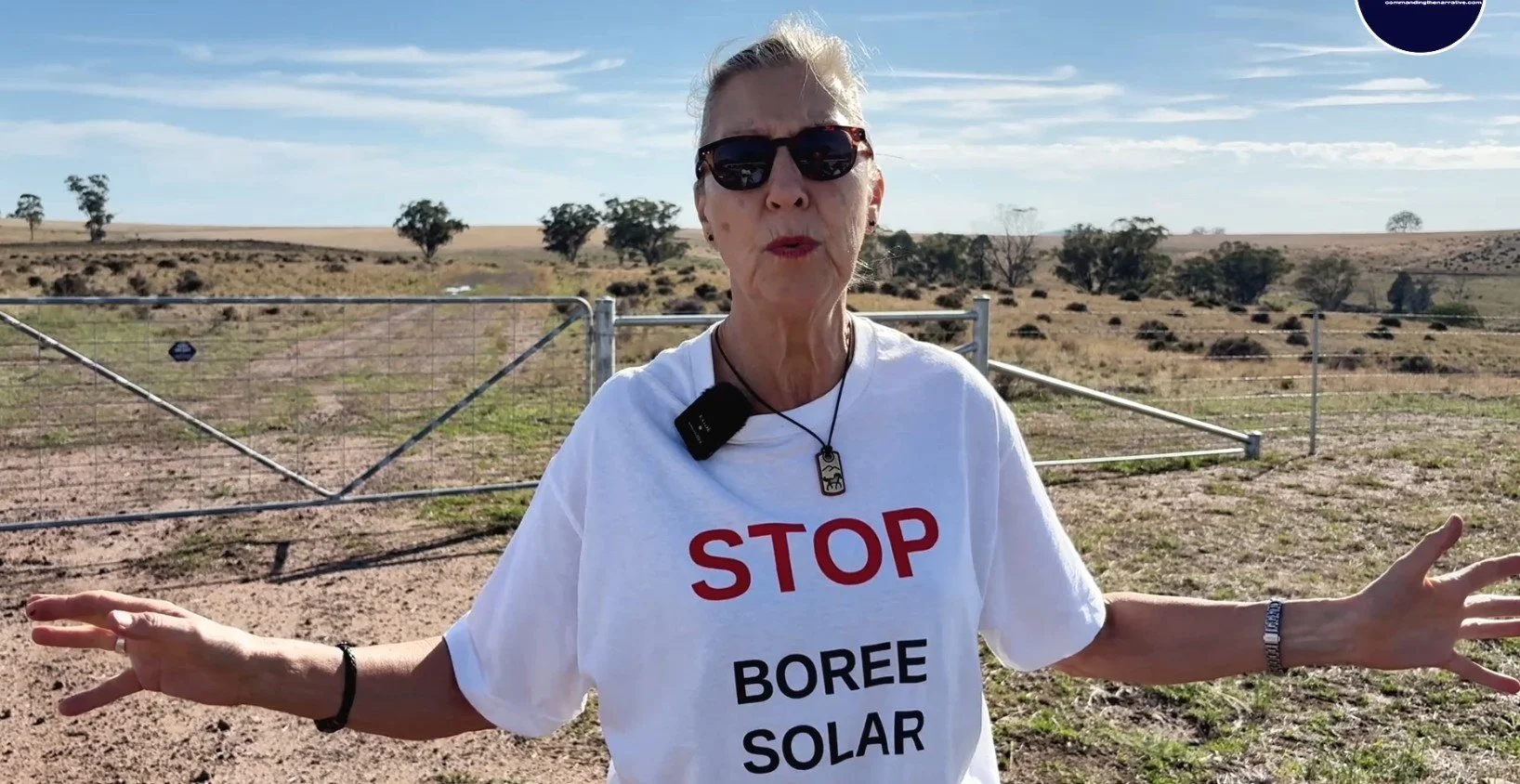
Mary in front of the proposed boree solar project
The Boree Solar project dwarfs the towns of Geurie, Wongarbon and the surrounding area. Another local, Pete, is also facing the project on three boarders of his property. I asked Pete to describe the land on which the solar project is to be built.
“We’ve got green country. It's pristine farming country. And we've also got native habitats all the way through here”.
For Pete, the lack of community engagement is his biggest concern, “We weren't engaged. We weren't consulted with and that's why I'm angry about it”.
“We got a letter in the mail that said basically, this is a done deal.”
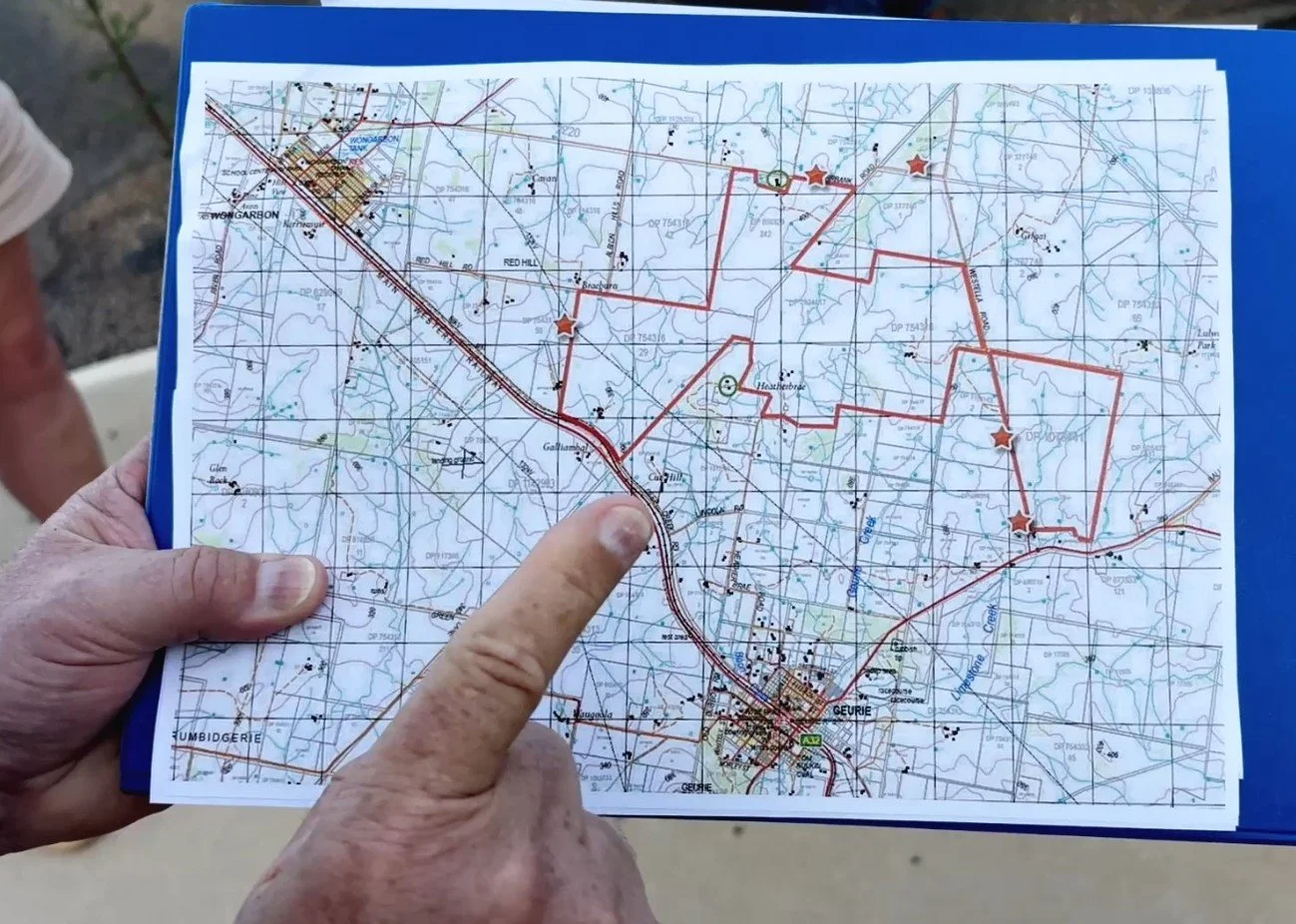
Map showing the proposed Boree Solar project drarfing the towns of Geurie and Wongarbon
In Gilgal, I spoke with community campaigner and former Federal candidate for Parkes, Sal Edwards, who echoed Pete’s concern, “the communities are kept in the dark. The truth is hidden from them. There's not one place still today where our communities can access information on the whole of the REZ project. It is only accessible project by project”.
Speaking passionately, Sal went on the say, “those that oppose it are often touted as the loud minority. But unfortunately, we're the ones that get the phone calls, or the people in the street, or our friends and neighbours in tears around the dining table. And not everyone can actually have the time or the capacity to step into the fight. But for every one of us, there's another 10 or 15 people not sleeping at night because of this. We are not a loud minority. We're just concerned community members”.
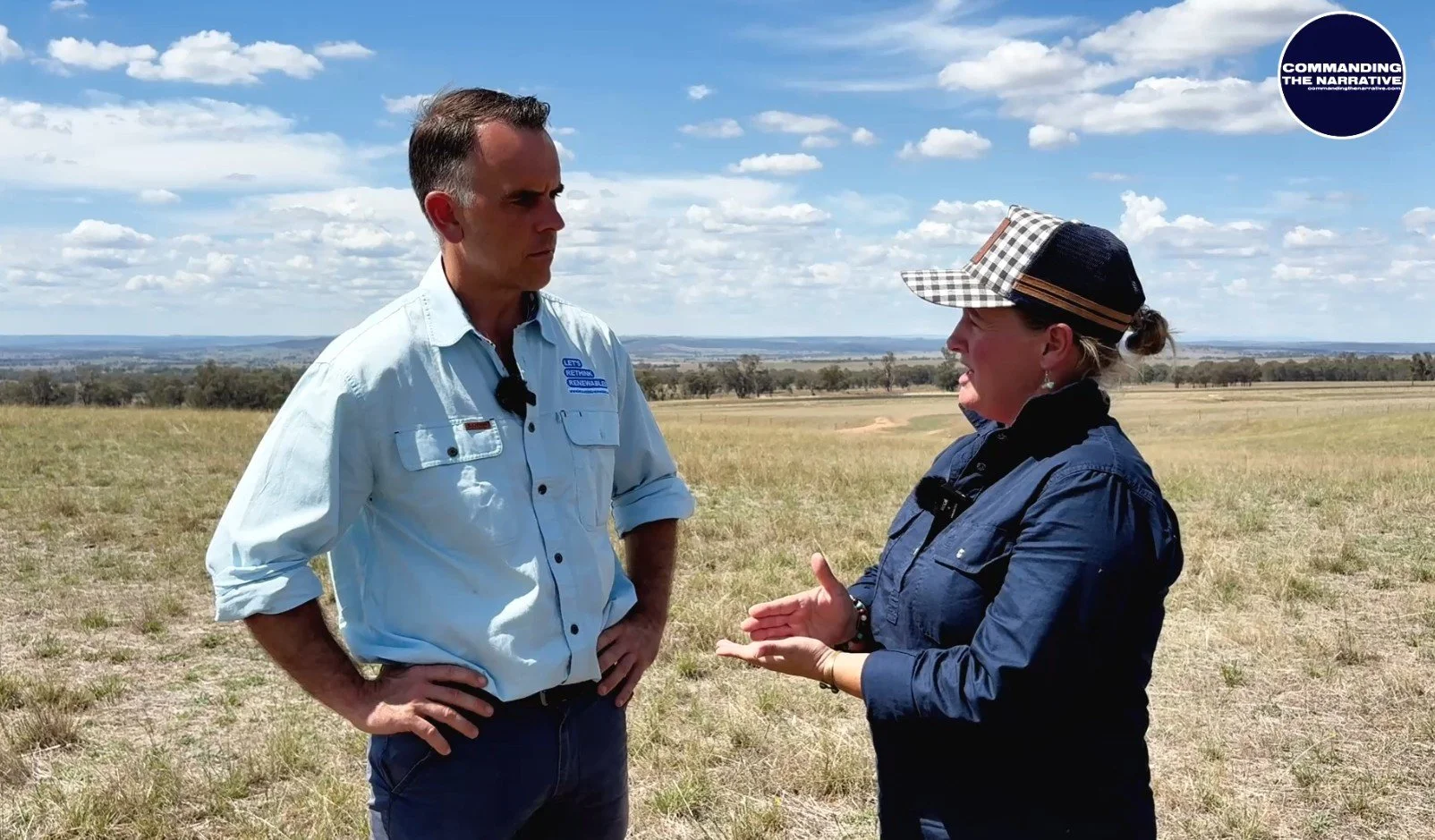
Sal Edwards in Gilgal
My dominant emotion when touring the CWOREZ was anger. Anger that our beautiful rural landscapes and the community that lived there were being torn apart by the mad rush to Net Zero.
I also felt completely helpless when speaking with the ordinary Australians who are having their lives ruined by renewable projects. Many I spoke to felt isolated and ignored when trying to advocate their opposition to these projects when up against the marketing machines and endless resources of Government and the multi-national corporations profiting from them.
My feelings were shared with all that joined the tour, including the President of Let’s Rethink Renewables, Katy McCallum, who said, “what I'm worried about is that the people in the city are not understanding the truth of what's happening out here”.
“The wildlife habitats, the strong communities, the Australian way of life - once those things are gone, they're gone for good”, Ms McCallum added. “You can't fix this land back here once you've contaminated it with concrete, steel, toxic heavy metals leeching off panels, BPA shearing off the blades of turbines.”
“It's the industrialisation of rural Australia. We just need every single Aussie to understand what's going on.”
The full footage of the CWOREZ tour can be found on the Commanding the Narrative YouTube page or at www.commandingthenarrative.com.
By Steven Tripp